Quick Summary
Bayside Animal Hospital offers core and non-core vaccination programs for dogs and cats at our Wolli Creek, Rhodes, and Green Square clinics. Puppy and kitten programs start from 6–8 weeks of age. C3, C5, and C7 vaccinations for dogs; F3, F5, and FIV for cats. Annual and triennial boosters available. Book your appointment online today.
What Our Clients Say About Vaccinations at Bayside
Trusted by Sydney pet owners across Wolli Creek, Rhodes and Green Square.
Why are Pet Vaccinations Important?
Pet vaccinations are effective at protecting your pet against serious and preventable diseases. Vaccines protect your pets and keep other pets and humans safe by reducing the spread of illness. Regular vaccinations help with:
- Disease prevention: Protect your pet against deadly illnesses like distemper, hepatitis, feline flu, and parvovirus.
- Long-term health savings: Preventing a disease is far more affordable than treating one.
- Community safety: Vaccinated pets reduce the risk of outbreaks in local suburbs like Wolli Creek.
- Legal compliance: In NSW, vaccinations are required for activities like daycare, boarding, and training classes.
Understanding Dog and Cat Vaccines: Core vs Non-Core
Not all vaccines are the same. Your vet will recommend a combination of core and non-core vaccines based on your pet’s age, lifestyle, and exposure risk.
Dog Vaccinations — What Does C3, C5, and C7 Mean?
| Vaccine | What It Covers | Type | Who Needs It |
|---|---|---|---|
| C3 | Parvovirus, Distemper, Hepatitis | Core — All Dogs | Every dog, regardless of lifestyle |
| C5 | C3 + Parainfluenza + Bordetella (Kennel Cough) | Core — Socialised Dogs | Required for kennels, daycare, dog parks, training |
| C7 | C5 + Leptospirosis + Coronavirus | Non-Core — Risk-Based | Dogs in rural areas or with high environmental exposure |
Cat Vaccinations — What Does F3, F5, and FIV Mean?
| Vaccine | What It Covers | Type | Who Needs It |
|---|---|---|---|
| F3 | Feline Herpesvirus, Calicivirus, Panleukopenia | Core — All Cats | Every cat, including indoor-only cats |
| F5 | F3 + Chlamydia + Bordetella | Non-Core — Risk-Based | Cats in multi-cat households or catteries |
| FIV | Feline Immunodeficiency Virus | Non-Core — Outdoor Cats | Cats with outdoor access or bite-wound risk |
Your Bayside vet will advise the right combination at your pet’s first consultation. Most dogs who socialise with other dogs need at least a C5, and most cats need a minimum F3 vaccination.
Puppy & Dog Vaccination Schedule
| Age | Vaccine | Type | Notes |
|---|---|---|---|
| 6–8 weeks | C3 (Parvovirus, Distemper, Hepatitis) | Core | First puppy vaccination — keep away from unknown dogs until course is complete |
| 10–12 weeks | C5 (adds Kennel Cough cover) | Core | Second round; C5 recommended for all socialising puppies |
| 14–16 weeks | C3 or C5 (finalising puppy course) | Core | Course complete — puppy now protected and can socialise safely |
| 12–16 months | C3 / C5 Booster | Core | First annual booster — critical to maintain immunity |
| Every 1–3 years (adult) | C3 (triennial) + C5 (annual) | Core | Your vet will advise based on vaccine type and your dog’s risk profile |
Kitten & Cat Vaccination Schedule
| Age | Vaccine | Type | Notes |
|---|---|---|---|
| 6–8 weeks | F3 (Herpesvirus, Calicivirus, Panleukopenia) | Core | First kitten vaccination |
| 10–12 weeks | F3 + FIV (if outdoor risk) | Core + Non-Core | Second round; FIV recommended for cats with outdoor access |
| 14–16 weeks | F3 (course finalised) | Core | Kitten now fully protected for first year |
| 12–16 months | F3 Booster | Core | First annual booster — do not skip |
| Every 1–3 years (adult) | F3 Annual or Triennial | Core | Schedule determined by vaccine type and lifestyle |
Pet Vaccinations at Bayside Animal Hospital
Bayside Vets tailors every vaccination plan to your pet’s age, health, and lifestyle. The veterinarians at Bayside provide gentle care and professional advice to make the entire process stress-free.
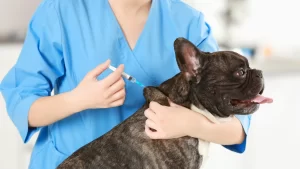
Protect your pup against parvovirus, distemper, canine cough, hepatitis, and other preventable diseases.
Learn more about our dog vaccination services.
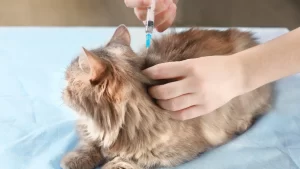
Keep your cats protected with routine vaccinations against feline enteritis, calicivirus, and feline herpesvirus.
Learn more about our cat vaccination services.
What Diseases Do Pet Vaccinations Protect Against?
Understanding what each vaccine protects against helps you make informed decisions about your pet’s preventive care plan.
Parvovirus (Dogs)
Canine parvovirus is a highly contagious and often fatal viral disease that attacks the digestive system and immune system. It spreads through contact with infected faeces and can survive in the environment for months. Puppies under six months and unvaccinated adult dogs are most at risk. Early symptoms include severe vomiting, bloody diarrhoea, and lethargy. Vaccination is the only reliable protection — there is no cure, only intensive supportive care.
Canine Distemper (Dogs)
Distemper is a serious viral disease affecting the respiratory, gastrointestinal, and nervous systems. It spreads through airborne exposure and contact with infected animals. Symptoms include nasal discharge, coughing, fever, and in advanced cases, seizures. While treatable, distemper can cause permanent neurological damage. The C3 vaccine provides reliable protection.
Infectious Canine Hepatitis (Dogs)
Caused by canine adenovirus, this disease affects the liver and can be life-threatening. It spreads through contact with infected urine, faeces, or saliva. Symptoms include fever, vomiting, abdominal pain, and jaundice. The C3 vaccination covers hepatitis as a core component.
Canine Cough / Kennel Cough (Dogs)
Kennel cough is a highly contagious respiratory infection caused by a combination of bacteria (Bordetella bronchiseptica) and viruses (Parainfluenza). It spreads rapidly in environments where dogs are in close contact — kennels, dog parks, groomers, and training classes. Symptoms include a distinctive harsh, honking cough. The C5 vaccination includes protection against both Bordetella and Parainfluenza and is required by most NSW boarding facilities.
Feline Panleukopenia / Feline Parvovirus (Cats)
Also known as feline enteritis, this virus attacks rapidly dividing cells — particularly in the digestive tract and bone marrow. It is highly contagious, resilient in the environment, and frequently fatal in kittens and unvaccinated cats. The F3 core vaccination provides protection and is recommended for all cats, including indoor-only cats.
Feline Herpesvirus (Cats)
Feline herpesvirus (FHV-1) is the leading cause of upper respiratory infections in cats and is present in most multi-cat environments. Once infected, a cat may carry the virus for life and shed it during periods of stress. Symptoms include sneezing, nasal discharge, conjunctivitis, and eye ulcers. Vaccination reduces the severity of infection and shedding — included in the F3 core vaccine.
Feline Calicivirus (Cats)
Calicivirus is another primary cause of feline respiratory disease and mouth ulcers. It spreads through direct contact and airborne particles. The virus mutates frequently, so while vaccination does not guarantee complete protection against all strains, it significantly reduces disease severity. Included in the F3 core vaccine.
What to Expect During Pet Vaccinations at Bayside
The pet vaccination process is simple, safe, and comfortable. Here’s how our process works:
- Step 1: Comprehensive Health Check — Every vaccination appointment starts with a vet consultation where we assess your pet’s overall health.
- Step 2: Discussion of Lifestyle and Risks — Our vets may ask about your pet’s daily activities, travel habits, home environment, or their level of exposure to other animals.
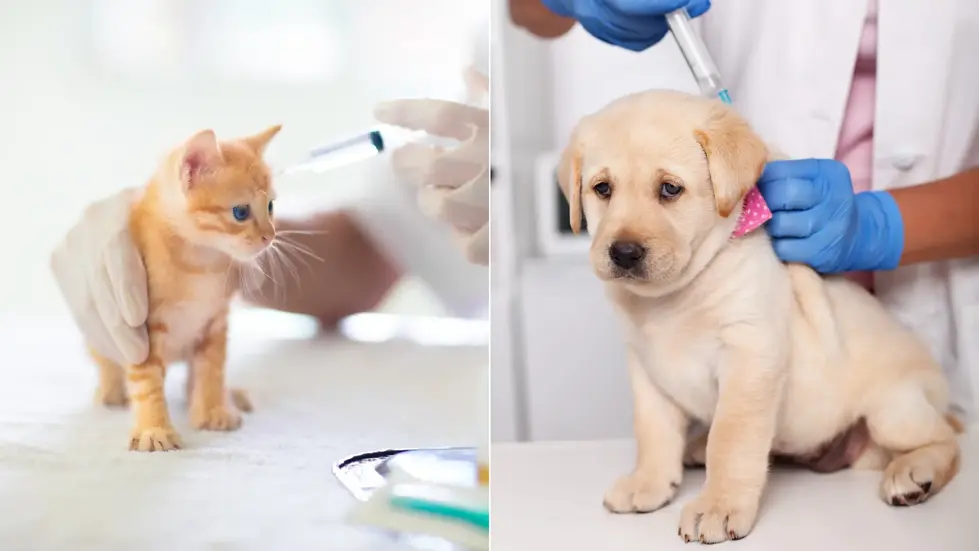
- Step 3: Administering the Vaccine — We gently handle your pet and perform a quick and virtually painless injection.
- Step 4: Advice and Aftercare — Our team explains any mild side effects to watch out for. After effects such as slight soreness at the injection site are normal, and so is tiredness when it comes to booster shots. If these side effects do not subside, contact us or visit our clinic immediately.
What to Bring to Your Pet’s Vaccination Appointment
Being prepared for your pet’s vaccination visit helps everything run smoothly. Please bring the following if available:
- Previous vaccination records — so we can check what has already been administered and when
- Health history — any diagnoses, surgeries, or medications your pet has had
- Current medications — including flea, tick, and worming treatments
- Pet insurance details — so we can assist with documentation if needed
- A secure carrier or leash — for the safety of your pet and other animals in the clinic
If this is your pet’s very first vet visit, don’t stress — our team will walk you through everything. New pet? No prior records? That’s perfectly fine. We’ll start fresh and set up a vaccination plan from scratch.
Puppy and Kitten Vaccination Programs
Puppies and kittens are particularly vulnerable to disease, and this is why we have a structured vaccination program that covers:
- Puppies: Vaccinations every 3-4 weeks from 6-16 weeks of age.
- Kittens: Vaccinations start from 6-8 weeks old, with follow-ups until 16 weeks.
- Booster Shots: Ongoing annual or tri-annual boosters, depending on your pet’s needs.
In addition, we also provide advice on diet, deworming, and microchipping during these early consultations, so your new pet gets the best start in life.
Our Vaccination Team
Bayside’s vaccination programs are overseen by vets with specialist qualifications in small animal medicine and feline health — giving you confidence that your pet’s preventive care is in expert hands.

Dr Nara Zhou
BVSc (Hons) MANZCVS (Medicine of Cats)
Veterinarian — Feline Specialist
MANZCVS (Medicine of Cats)Feline VaccinationCat HealthEnglish & Mandarin
Dr Zhou holds membership of the ANZCVS in Medicine of Cats — a direct credential match for feline vaccination and cat health.

Dr Peggy Xu
BVSc (Hons) MANZCVS (Small Animal Medicine)
Senior Veterinarian
MANZCVSSmall Animal MedicineEnglish & Mandarin
Dr Xu brings specialist-level knowledge of small animal medicine to every vaccination plan, with consults available in English and Mandarin.

Dr Don Chan
BVSc (Hons) MVM MANZCVS JP
Veterinary Director
Veterinary DirectorMANZCVSCompanion Animal
As Veterinary Director with an MVM in Companion Animal Practice, Dr Chan oversees our vaccination programs and clinical standards.
We consult in English, Mandarin, and Cantonese. Our multilingual team serves the diverse communities of Wolli Creek, Rhodes, and Green Square. Meet our full team.
Common Vaccination Myths — What’s True and What’s Not
MYTH
“Indoor cats don’t need vaccines.”
False. Even indoor-only cats require core vaccinations. Feline Herpesvirus and Calicivirus can be carried into the home on clothing and shoes. Feline Panleukopenia survives in the environment for months. An indoor cat with no immunity is fully vulnerable if exposed — which can happen through open windows, escape, or a new pet joining the household. The F3 core vaccine is recommended for all cats.
MYTH
“My dog only needs one vaccination, then they’re protected for life.”
False. Immunity from vaccines wanes over time. Some core vaccines (like the C3) can last up to three years with triennial boosters, but others — particularly Kennel Cough components — require annual top-ups. Missing a booster can leave gaps in immunity. Your Bayside vet will advise the correct schedule for your dog’s vaccine type and lifestyle.
MYTH
“Vaccines cause more harm than good.”
False. Serious adverse reactions to veterinary vaccines are extremely rare. The mild side effects (lethargy, injection site tenderness for 24–48 hours) are common and temporary. The diseases vaccines prevent — parvovirus, distemper, feline panleukopenia — have high mortality rates without treatment. The benefit-to-risk ratio is overwhelmingly in favour of vaccination.
MYTH
“I can’t afford both a vet check and a vaccination in one visit.”
Good news: at Bayside, a health check is included in every vaccination appointment. You get a full clinical assessment of your pet’s health alongside their vaccination — in a single, cost-effective visit. Many clients also combine vaccinations with microchipping, dental checks, or parasite prevention consultations.
How Much Do Pet Vaccinations Cost at Bayside Animal Hospital?
Vaccination costs vary depending on your pet’s age, health status, and which vaccines are required. We provide a transparent estimate before every appointment — no hidden fees. Below is a general guide:
| Service | Indicative Cost Range | Notes |
|---|---|---|
| Puppy / Kitten vaccination (per visit) | From $120–$180 | Includes health check consultation |
| Adult dog / cat annual booster | From $110–$160 | Includes health check consultation |
| Full puppy vaccination course (3 visits) | From $350–$500 | Course pricing indicative; confirm at time of booking |
| Combined vaccination + microchip | From $200–$280 | Convenient single-visit option |
Most pet insurance policies cover annual vaccinations — check your policy details or ask our team. For an exact quote, book online or call your nearest clinic.
Pet Vaccinations Near You — Sydney Locations
Our three clinics are conveniently located across inner Sydney, making it easy to keep your pet’s vaccinations up to date. We serve pet owners from the following suburbs and surrounding areas:
- Wolli Creek
- Rhodes
- Green Square
- Waterloo
- Mascot
- Arncliffe
- Alexandria
- Marrickville
- Meadowbank
- Rosebery
- Zetland
- Concord
Can’t find your suburb? All three of our locations are close to public transport and offer street parking. Call us to find out which clinic is most accessible for you.
Vaccination Requirements in NSW — What You Need to Know
In New South Wales, proof of current vaccination is required by law for:
- Dog boarding facilities and kennels — minimum C5 vaccination required by most reputable facilities
- Dog daycare and group training classes — Kennel Cough (Bordetella/Parainfluenza) vaccination typically required
- Cat catteries and boarding — current F3 vaccination required by most facilities
- Dog parks (some councils) — check your local council requirements
Pet Insurance and Vaccinations
Many pet insurance policies require proof of current vaccinations to maintain coverage. Lapsed vaccinations can affect your ability to claim for certain conditions. After every visit, we provide an updated vaccination certificate you can use for boarding facilities, daycare, domestic pet travel, and insurance compliance. Historical records? Contact us and we can pull your pet’s full vaccination history.
Common Questions About Pet Vaccinations in Bayside Animal Hospital
Yes, we recommend booking ahead so we can allocate enough time for a full health check and vaccination. Book a vet appointment online in just a few clicks.
The cost of a vaccination depends on your pet’s age, health, and which vaccines are required. We will provide a transparent estimate before treatment begins. See our cost guide above for indicative pricing.
Absolutely! Many clients pair vaccination appointments with our other veterinary services, such as vet consultations, dental checks, and microchipping for convenience.
Mild side effects are common and include tenderness at the injection site, a low-grade fever, fatigue, and slightly reduced appetite. These typically resolve within 24–48 hours. A small lump at the injection site may persist for up to two weeks. If you notice worsening redness, swelling, discharge, or facial swelling after 1–2 days, call us immediately.
Yes we do! If your pet urgently needs vaccination for boarding or daycare, an after-hours emergency vet at Bayside Animal Hospital can help. We provide same-day appointments where possible.
Adult dogs typically require an annual booster for Kennel Cough (Bordetella/Parainfluenza, part of the C5) and a C3 core vaccine booster every one to three years depending on the vaccine product used. Puppies receive a series of three vaccinations from 6 to 16 weeks of age, followed by a booster at 12 to 16 months. Your Bayside vet will build a tailored schedule based on your dog’s vaccine history and lifestyle.
A C3 vaccine covers the three core diseases: Parvovirus, Distemper, and Hepatitis. A C5 adds Parainfluenza and Bordetella (the primary Kennel Cough agents) to the C3. A C7 further adds Leptospirosis and Coronavirus on top of the C5. Dogs that socialise with other dogs, attend kennels, or visit dog parks need at minimum a C5. Your Bayside vet will recommend the right combination for your dog’s risk profile.
Yes. Even indoor-only cats should receive the core F3 vaccination. Feline Herpesvirus and Calicivirus can enter the home on clothing, shoes, and through windows. Feline Panleukopenia is highly resilient in the environment. Core vaccinations are recommended for all cats regardless of whether they go outdoors. Non-core vaccines such as FIV may be added for cats with outdoor access.
If your pet’s booster is overdue, part of the vaccination course may need to be restarted depending on how long the lapse has been. Some vaccines maintain immunity for up to three years; others lapse more quickly. Do not delay — lapsed immunity leaves your pet vulnerable to preventable disease. Contact Bayside and we will check your pet’s history and recommend the most efficient catch-up schedule.
Yes. After every vaccination, we provide an updated vaccination certificate that you can present to boarding facilities, daycare centres, and for domestic pet travel requirements. If you need a copy of your pet’s vaccination history, contact our clinic and we can access and reprint it. For international pet travel, requirements vary significantly by destination country — speak to our team well in advance of your travel date.
Book Your Pet Vaccination at Bayside Vets Today
Regular vaccinations are one of the most important parts of preventive pet care. We offer affordable, professional vaccination services to keep your pet healthy for years to come.
Book a vet appointment online or visit us at one of our convenient locations today.